
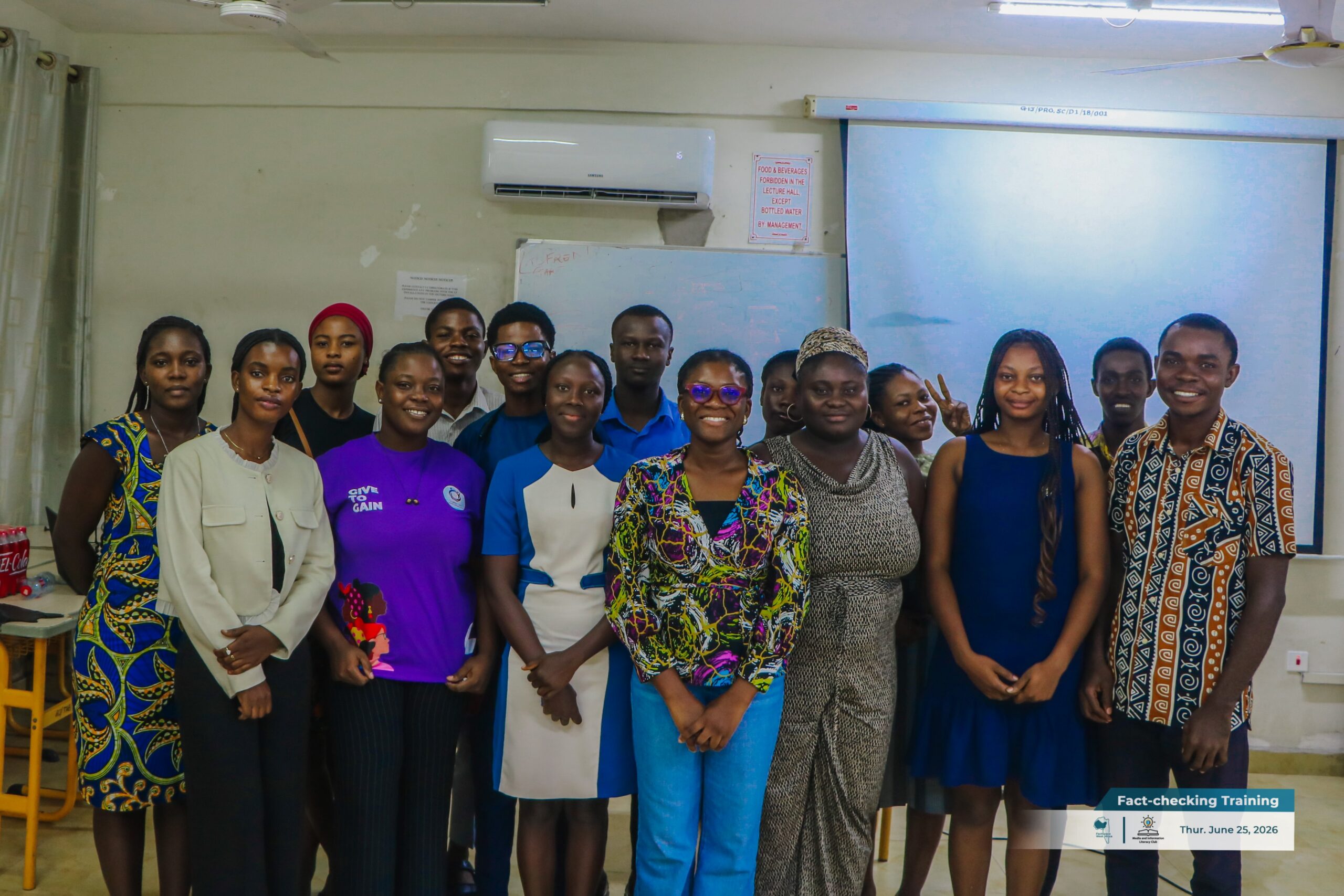
FactSpace West Africa has facilitated two distinct training sessions on fact-checking and digital information verification at the University of Media, Arts and Communication-Institute of Journalism (UniMAC-IJ).
The initial training, held on June 24, 2026, was at the behest of the Media and Information Literacy (MIL) club and aimed to equip students with practical skills for verifying online information and navigating today’s information ecosystem..
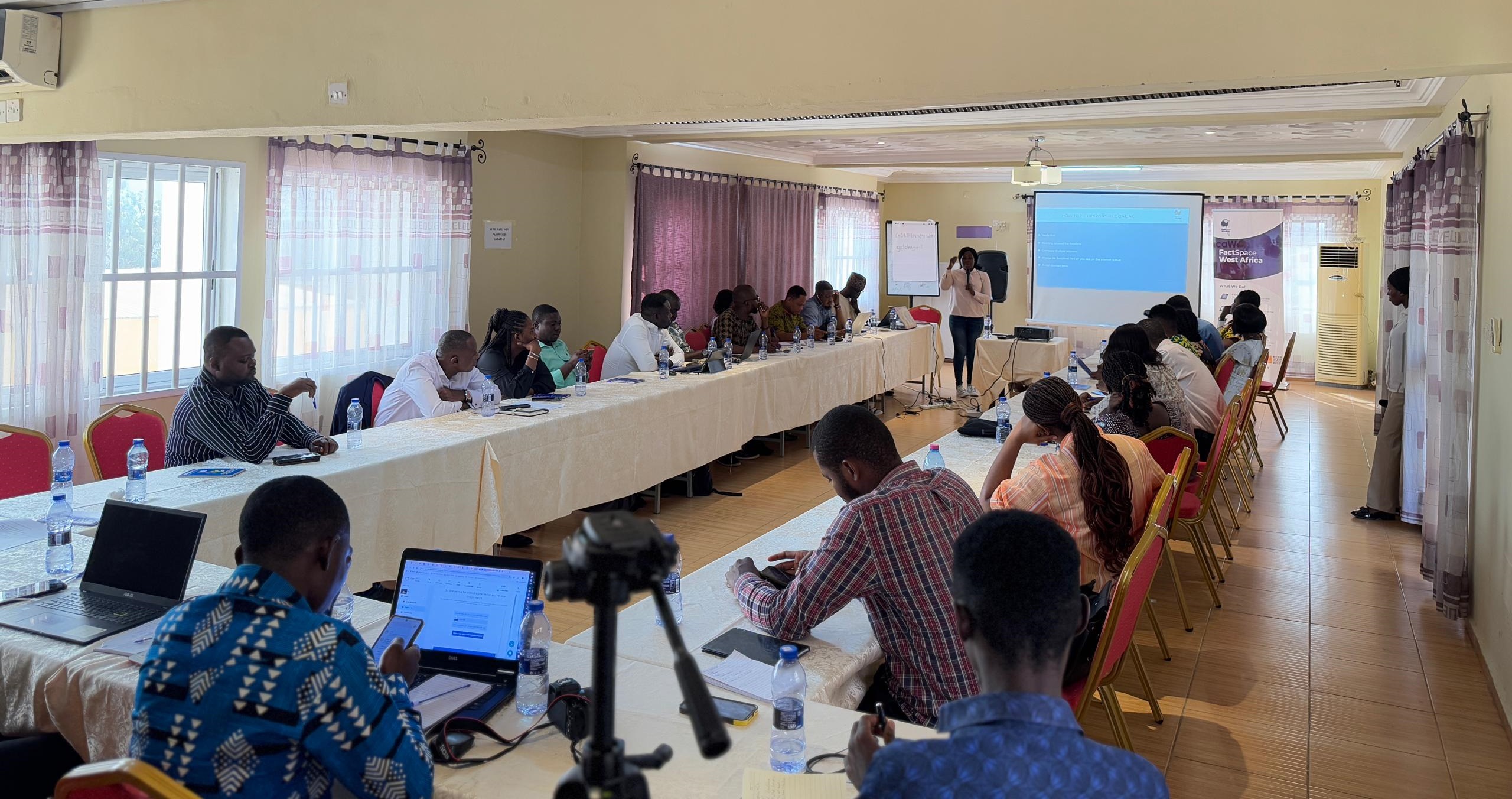
It brought together 19 participants, including MIL Club members and other interested students.
The session was facilitated by Samuel Adjetey Adjei and Gifty Danso, both research associates with the FactSpace team.
RelatedNews

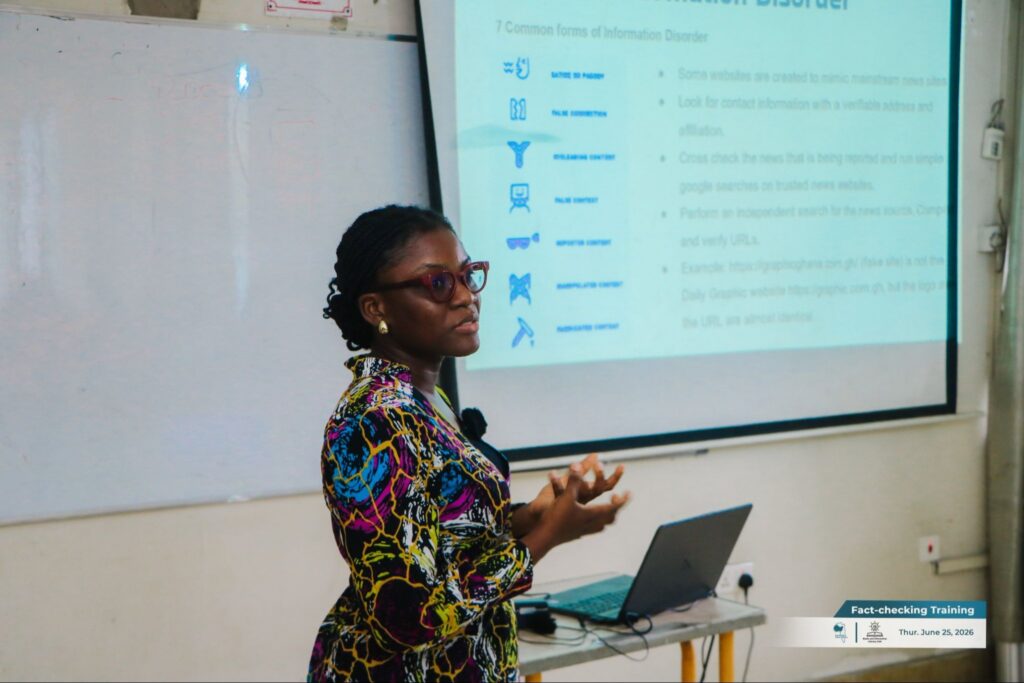
Participants were introduced to the fundamentals of information disorder, the fact-checking process, and the use of digital verification tools. They received practical demonstrations on Google Reverse Image Search, the InVID Verification Plugin, and AI-detection tools, while also discussing the strengths and limitations of Artificial Intelligence in fact-checking.
The training concluded with an interactive discussion on career opportunities in the information integrity field. Students were encouraged to develop skills in fact-checking, digital verification, research, and media literacy while pursuing their studies.
Samson Osei Dapaah, president of the UniMAC-IJ MIL club said: “This training is very educative.. students gained practical skills using tools like Yandex, Google Reverse Image Search and InVid Verification tool to verify information. This is going to be a very important part of the journalism we want to pursue in the future.”
Priscilla Oduro, a level 200 student who was also present at the training said: “As a communication student, what I learnt at the MIL training today is going to help me in the long run. I won’t say in the short run.”
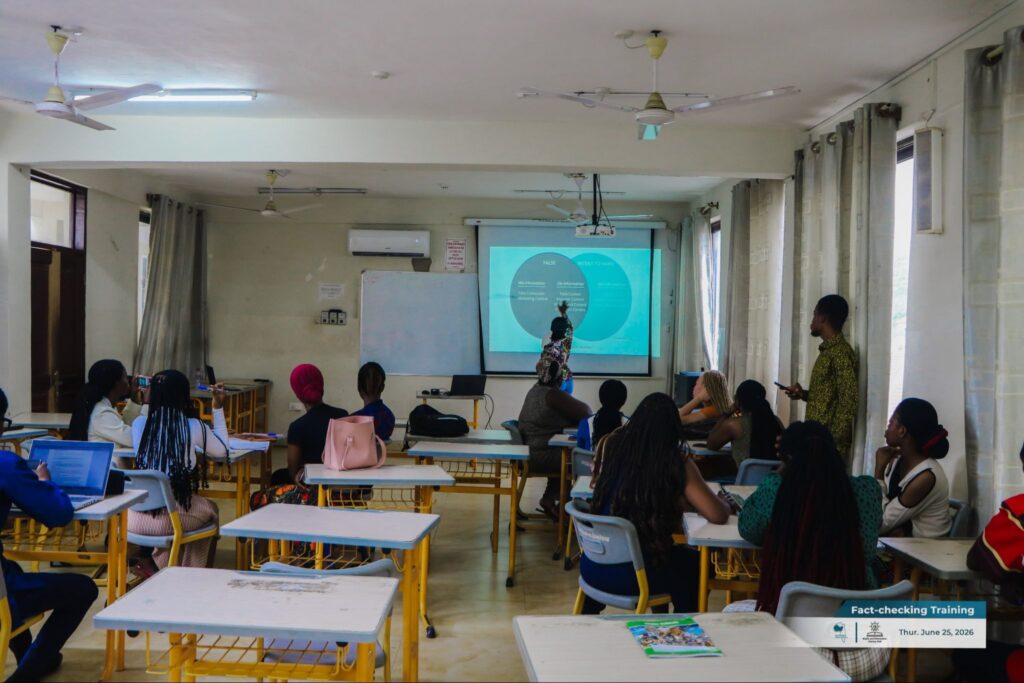
The second training was part of an annual request from the New Media lecturer, Dr. Nathaniel Alpha, who invites FactSpace West Africa to undertake guest lecturer roles for Communication Studies students at the diploma level.
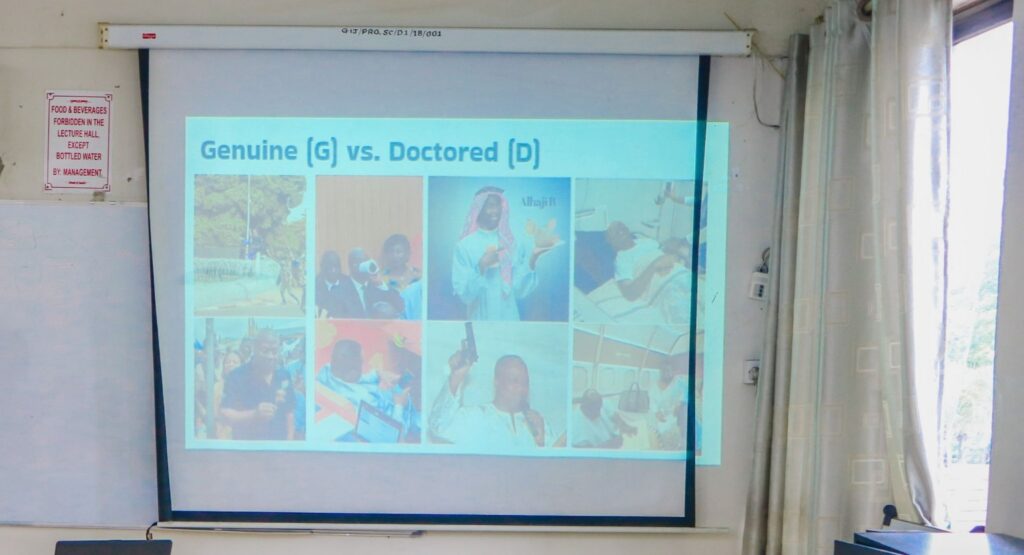
The topic for the class was ‘Understanding Misinformation/Disinformation,’ with guest lecturer and editor of FactSpace, Abdur Rahman Alfa Shaban, taking the class of about 40 students through information disorder and digital information verification.
“As part of your course, we need to take you through mis and disinformation; every year, however, we have invited experts who work in the area to take the class through, given the importance of the subject to the practice of journalism today,” Dr. Alpha said in his introduction.
Topics covered included information disorder and fake news, the importance of fact-checking, the role of social media and Artificial Intelligence (AI) in driving information disorder and a peek into simple verification tools like Google Reverse Image Search.
Participants generally admitted to having a good grasp of information disorder and the three pillars it rests on after the session. Others said they were now able to identify the forms of information disorder and how to be responsible sharers of information on social media.