
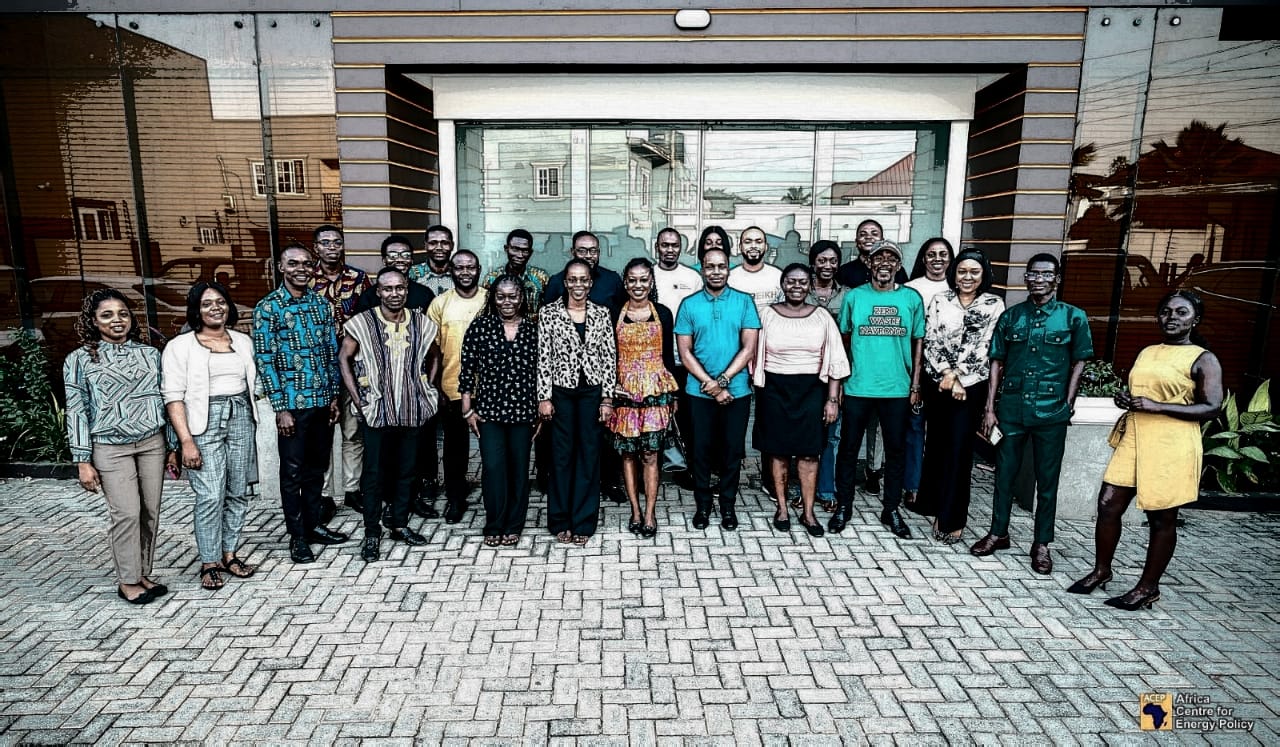
Accra – October 23, 2026 – FactSpace West Africa participated in the third cohort of the Media Fellowship on Fiscal Accountability and Anti-Corruption organised by the Africa Centre for Energy Policy (ACEP).
FactSpace’s Research Associate and Multimedia Lead, Samuel Adjetey Adjei represented the organisation at the two-day fellowship, which took place between October 21 to 22, 2026, at the ACEP offices in Accra.
The fellowship aimed to strengthen journalists’ capacity to report on public finance, investigate corruption and develop evidence-based accountability stories using budget documents, procurement records, audit findings and other publicly available data.
It brought together media practitioners to analyze Ghana’s economic conditions, understand the national budget, track public expenditure and study investigative approaches to reporting on the management of public resources. The programme also focused on developing digital advocacy strategies to make fiscal issues more accessible to the public.
Samuel expressed appreciation to ACEP for the opportunity, noting that the training would strengthen his ability to verify claims about public spending and develop more in-depth accountability stories.
“I am grateful to ACEP for the opportunity to participate in this fellowship. As a fact-checker, the training has deepened my understanding of how to interrogate budget documents, track public expenditure and use procurement records and audit findings to investigate claims about public resources.
“I intend to apply these lessons to my work by developing more evidence-based accountability stories and translating technical fiscal information into accessible multimedia content that helps citizens understand how public funds are allocated and used,” he said.
Day 1
The first day focused on Ghana’s economy, the national budget and tools for tracking public spending. Eric Yartey, a Principal Economist at the Ministry of Finance, led a session on the budget development process, helping fellows understand how government priorities are translated into budgetary allocations.
Another session, facilitated by Ezra Abban, Programmes Lead at ACEP, introduced fellows to key public financial management concepts, including allocation, appropriation and disbursement. He highlighted data sources for fiscal investigations, including the Common Fund website, the Ghana Electronic Procurement System (GHANEPS), the Ghana Integrated Financial Management Information System (GIFMIS) and reports from the National Development Planning Commission.
Fellows were also introduced to ways of tracking the District Assemblies Common Fund (DACF) at the local government level. They examined how Annual Composite Budgets, Annual Action Plans and Annual Progress Reports can help journalists interrogate public expenditure and compare planned activities with implementation progress. The session also highlighted the Right to Information (RTI) process as a crucial means of obtaining information that is not publicly available.
Day 2
The second day focused on investigating corruption in public resource management, developing budget-focused stories and using digital advocacy to reach wider audiences. Investigative journalist, Manasseh Azure Awuni facilitated sessions on investigative reporting and story development, explaining how document reviews, procurement records, audit findings and public data can provide leads for public-interest investigations.
Fellows also learnt how to develop a story hypothesis, establish evidence chain, identify relevant sources and prepare interview questions. The discussions emphasised the importance of connecting fiscal figures to their impact on citizens while giving relevant individuals and institutions the opportunity to respond to allegations before publication.
The final session, facilitated by the West Africa Civil Society Institute (WACSI), focused on digital advocacy and campaign development. Fellows learnt how budget-focused stories can be amplified through podcasts, X Spaces, explainers and social media campaigns, while ensuring that complex fiscal findings are communicated accurately without oversimplification or sensationalism.
The fellowship concluded with discussions on next steps, including the development and dissemination of budget-focused outputs.
For FactSpace West Africa, the training provides an opportunity to strengthen its approach to fact-checking public expenditure claims and developing evidence-based accountability stories.
Written by Samuel Adjetey Adjei