

West Africa has remained Ebola-free since the World Health Organization (WHO) in May 2026 declared Ebola Virus Disease (EVD) a public health emergency of international concern (PHEIC) and different countries in the region rolled out preventive measures against possible infection.
The Ebola virus’ recent spread started and has been spreading in the Democratic Republic of Congo (DRC), where the current Bundibugyo strain of EVD was reported, before cases were later recorded in Uganda and, more recently, Kenya.
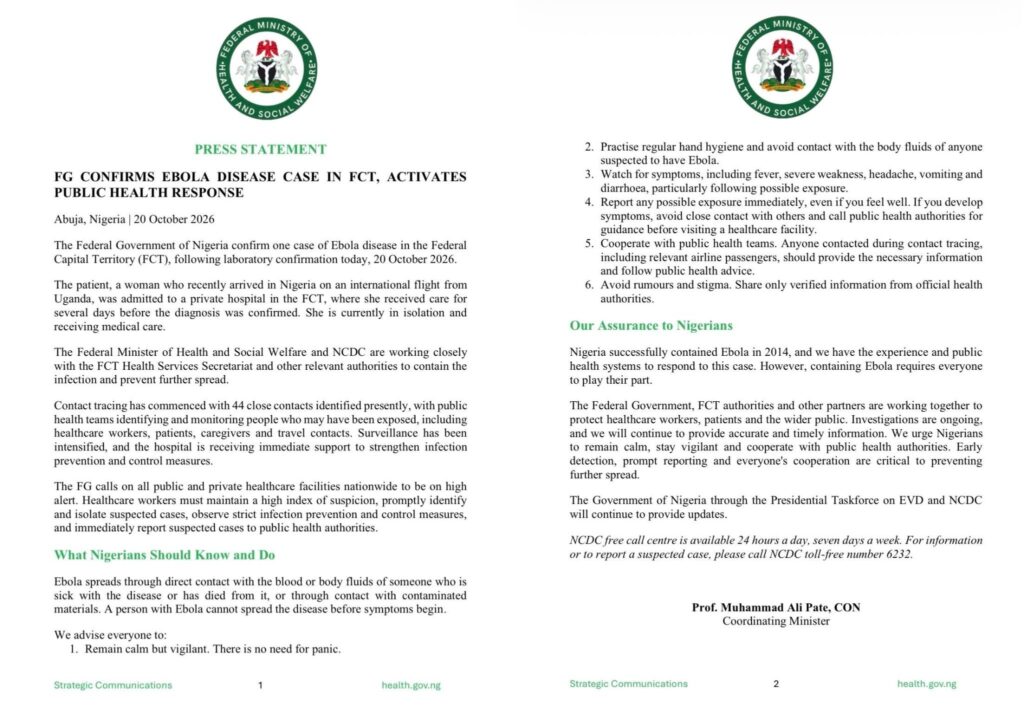
It wasn’t until October 20, 2026, that West Africa recorded its first case of Ebola virus infection when Nigeria confirmed a case in the Federal Capital Territory (FCT), Abuja.
“The Federal Government, working with the NCDC and relevant health authorities, is taking the necessary steps to protect public health and strengthen surveillance following the confirmation of an Ebola disease case in the FCT,” the Federal Ministry of Health stated on X.
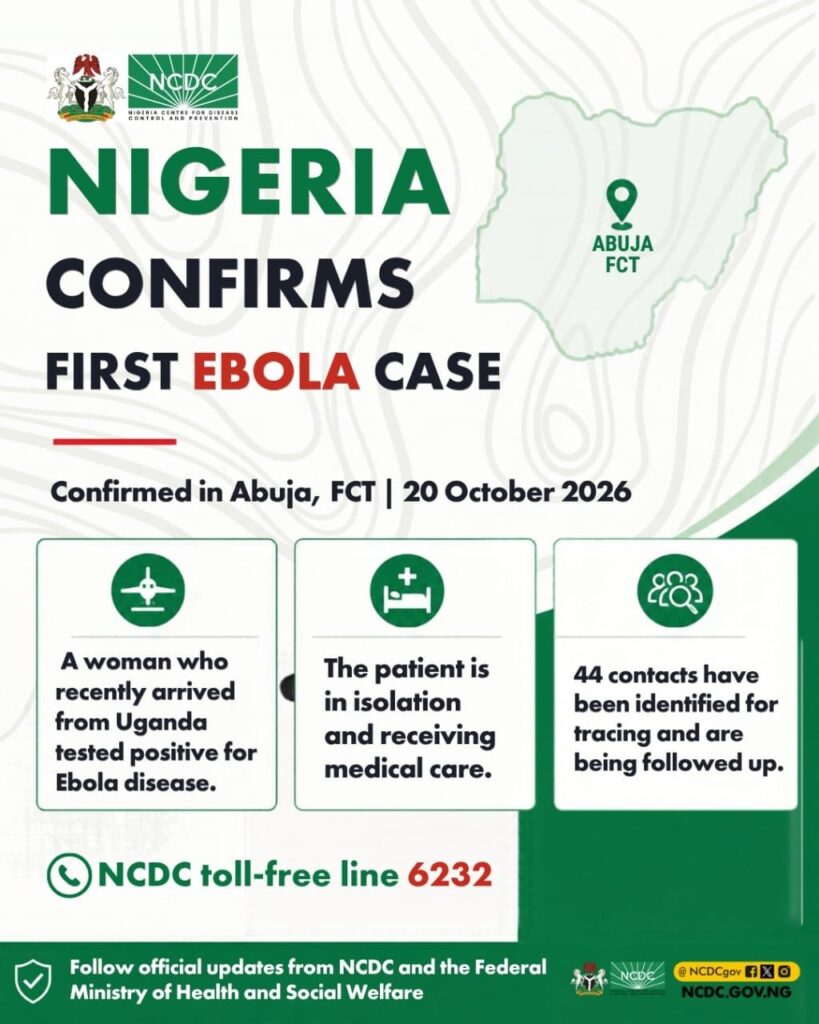
In this article, we present 10 key points about Nigeria’s Ebola case:
- The case was announced on October 20, and the patient was a woman who arrived on an international flight from Uganda.
- The case developed symptoms on October 7, four days after arriving in Nigeria. She sought care in Abuja on 11 October and tested positive for Bundibugyo virus on October 20, the WHO confirmed. 44 close contacts were identified and surveillance efforts activated.
- October 21 – The Presidential Taskforce on Ebola Preparedness, headed by the Chief of Staff, assured Nigerians of adequate containment strategies.
- October 22 – The federal government, via Circular No. PS/FMOH/08/VIII/48, announced Federal Government-approved Ebola Virus Disease (EVD) entry protocols at all designated points of entry into Nigeria. “Under the directive, relevant institutions are required to ensure strict adherence to prescribed screening procedures, health declaration requirements, surveillance measures and other applicable entry protocols.”
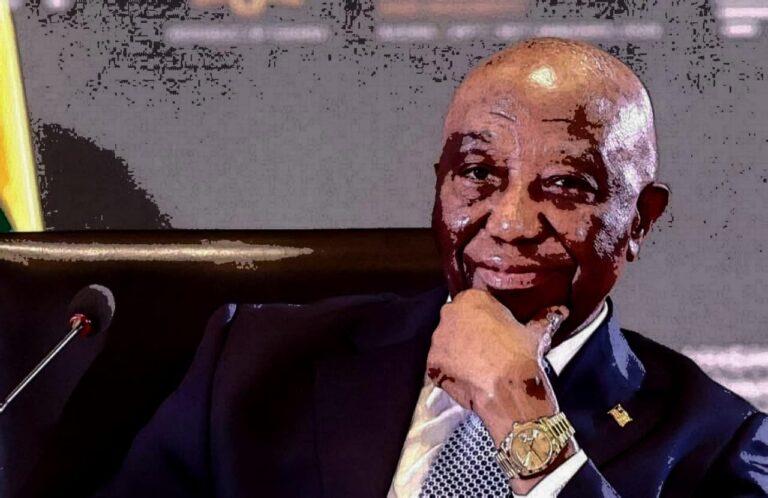
- October 23 – The government, through Health Minister Prof. Muhammad Ali Pate, confirmed that the FCT Ebola case’s genomic analysis indicated the virus identified in Nigeria is genetically related to the virus identified in a case in Kenya.
- October 23 – Switzerland’s foreign ministry confirmed in a BBC report that the woman was a 42-year-old Ugandan-born national married to a Swiss diplomat. She was a resident of Abuja.
- October 25 – The Nigeria Centre for Disease Control and Prevention (NCDC) warned that misinformation could undermine efforts to contain Ebola, saying false claims could create fear, discourage people from reporting symptoms and weaken public cooperation.
- October 26 – Minister Pate confirmed that the index case had been flown out of the country to Switzerland via an air ambulance. “The index patient was clinically much improved, stable, conscious, communicating, and her clinical laboratory test results closing towards baseline. This does not mean she is not still infectious, hence the strict protocols in place. The patient was evacuated along with her spouse, who has remained asymptomatic,” the Minister said on X.
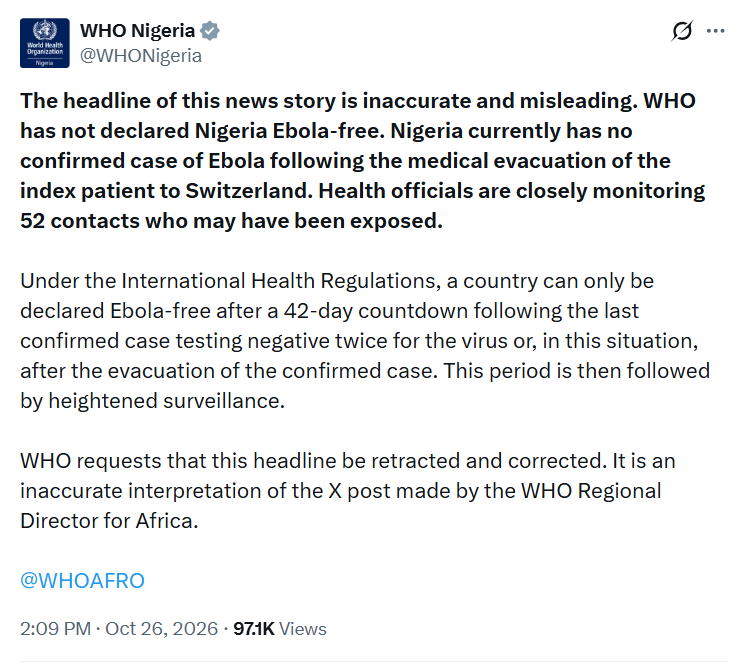
- No active case but not Ebola-free yet: With the evacuation of the index case, Nigeria does not have an active Ebola case but needs to go through WHO processes to be declared Ebola-Free. WHO Nigeria clarified the processes in response to a news report that the country was Ebola-free.
- The Ebola-Free Countdown: If Nigeria goes 42 days without any new active case, the country could be declared Ebola-free in early December 2026. “Under the International Health Regulations, a country can only be declared Ebola-free after a 42-day countdown following the last confirmed case testing negative twice for the virus, or in this situation, after evacuation of the confirmed case,” WHO Nigeria clarified.