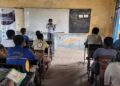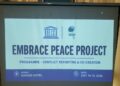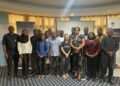

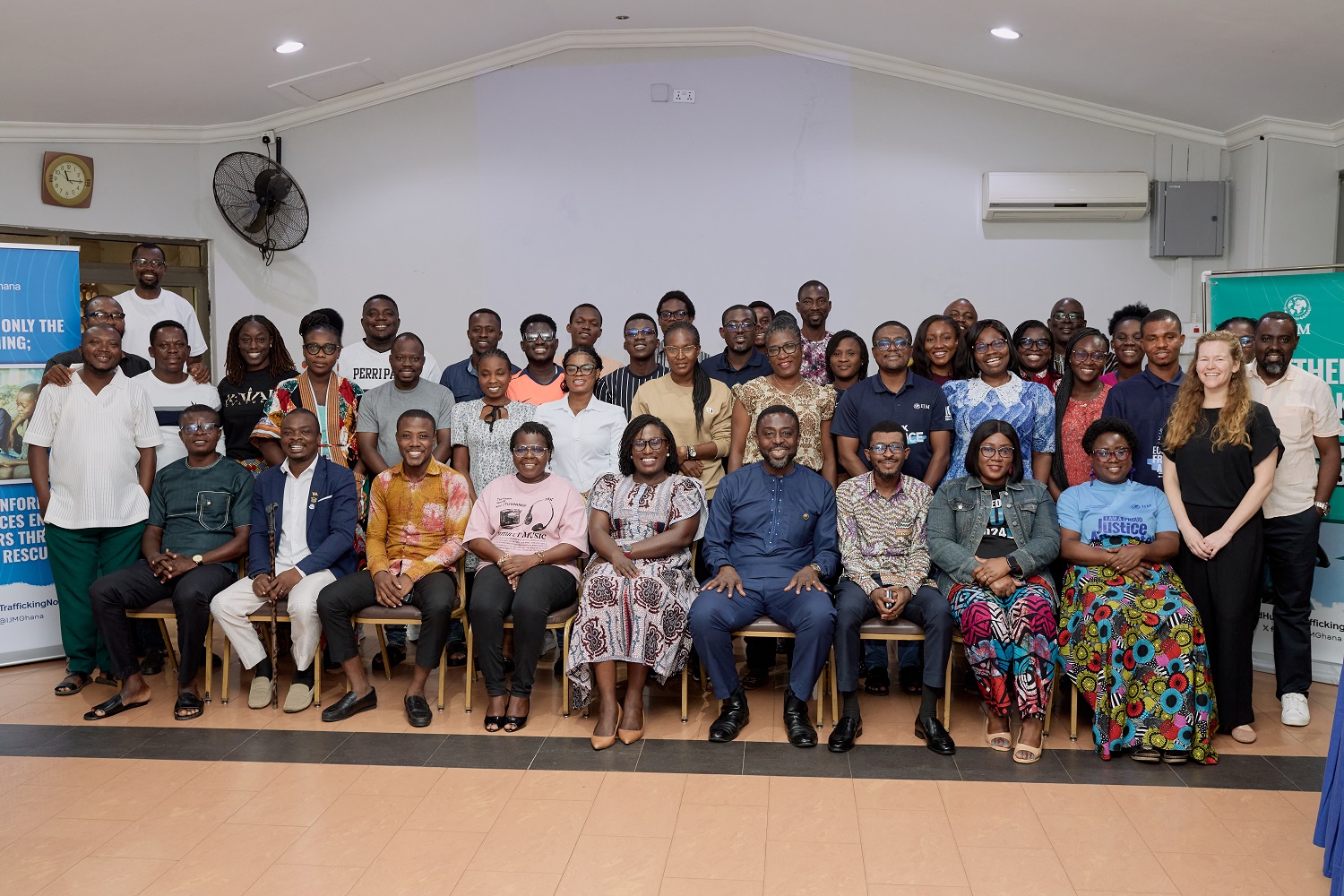
Accra, May 22, 2026 – FactSpace West Africa participated in a three-day workshop focused on child trafficking, forced labour and trauma-informed journalism. The three-day workshop took place from 20 – 22 May at the Hephzibah Christian Center in Aburi.
The training brought together media practitioners from across the Greater Accra and the Eastern Regions to learn about the work of the International Justice Mission (IJM) but more importantly to be exposed to trauma-informed reporting.
FactSpace editor, Abdur Rahman Alfa Shaban, who represented the organization emphasized the importance of the training, stressing how social media and digital platforms are fast challenging the traditional understanding of trafficking.
“Issues of rights and exploitation like trafficking and forced labour are increasingly seeing a growing role of digital platforms so it is important that journalists know how to detect and also help combat trafficking online,” Shaban said.
RelatedNews

Training sessions
There were nine sessions across the three days spanning the work of IJM (the organization, its partnership with government, community engagement efforts and media advocacy footprints across Africa.)
Officials from two main state agencies, the Human Trafficking Secretariat under the Gender Ministry and the Anti-trafficking Unit of the Ghana Police Service also made presentations on their work in the area of fighting trafficking.
Participants were also given a masterclass in investigative journalism and application of Right To Information law in a session led by Seth Kwame Bokpe of the Media Foundation for West Africa (MFWA).
Trainers unanimously emphasized the need for journalists to always tell impactful stories about victims and survivors, urging the media to prioritize factual and solution oriented journalism that protects survivors and society at large.
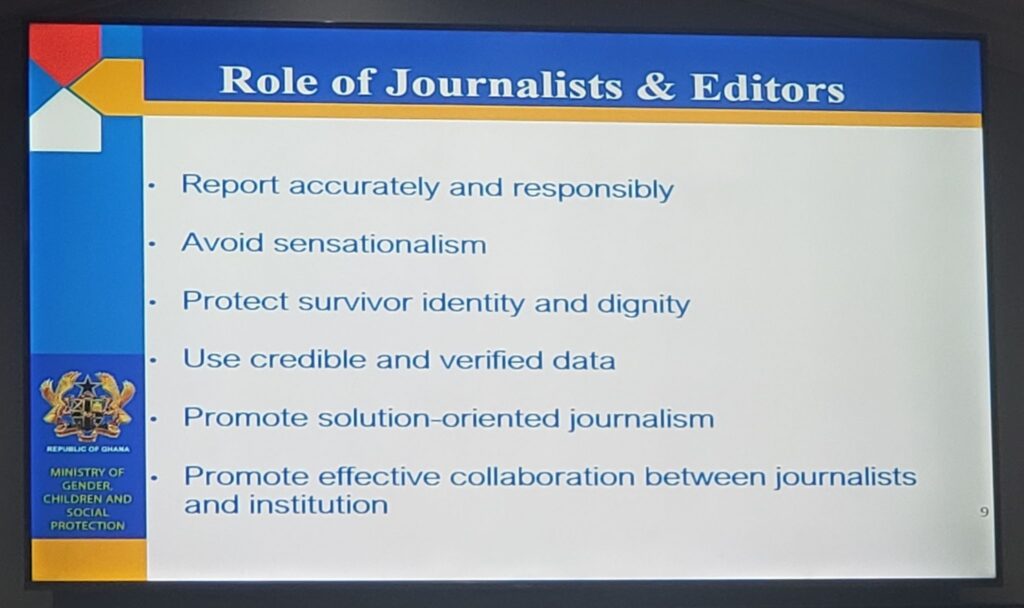
FactSpace West Africa’s focus going forward will be to fill the reporting gap in terms of the role digital platforms play in enabling trafficking in persons.
“We will also look at mainstream media misreporting on trafficking and publish narrative reports on discourse around social media posts about trafficking survivors. We will commit to story telling and advocating through our work for the best interest of survivors via trauma-informed journalism,” Alfa added.
The training was organized by IJM with support from the Ghana Journalist Association (GJA), who had national and regional officers joining the training. IJM honoured some journalists who had filed impactful reporting on trafficking over the course of the year.
IJM is a global organisation that protects people who are vulnerable from violence. In Ghana, IJM supports authorities to combat human trafficking by equipping institutions and law enforcement agencies to investigate and respond to cases of trafficking.