
Governments across the world have in the last few years moved to enact laws that would help fight information disorder, especially with the blistering growth of social media and the increasing abuse of these platforms by some users.
Laws on cybersecurity, mis and disinformation, hate speech and Child Online Protection (COP) continue to evolve even as the ill use of platforms also continue to mutate. In this context, the government’s role is often restricted to legislation – enacting and implementing laws.
Much of the digital literacy and allied efforts aimed at protecting digital rights and the information ecosystem, especially in Africa, has been championed largely by Non Governmental Organizations (NGOs) and Civil Society Organizations (CSOs), who actively work to complement government efforts.
For example, fact-checking as a function of information integrity has been led across most of Africa by NGOs and non-partisan media organizations that largely rely on donor funding to do their work and implement projects.
RelatedNews

The unique case of The Gambia
Across West Africa, governments have used different interventions beyond legislation to combat information disorder. Governments have run campaigns against misinformation usually through information ministries. During the botched December 2025 coup in Benin, the government officially outdoored a WhatsApp channel dedicated to debunking false information.
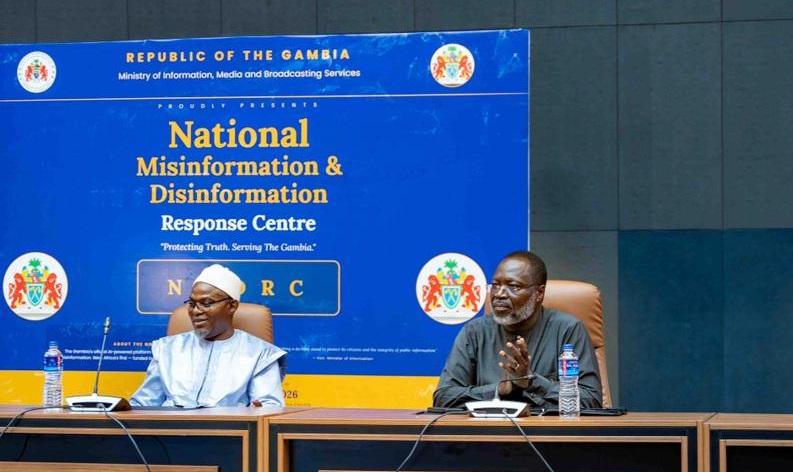
On April 25, 2026, however, The Gambian government outdoored a novel project with the inauguration of a National Misinformation and Disinformation Response Centre. The center, funded by the regional political bloc ECOWAS, was described as the first of its kind in West Africa.
ECOWAS said during the launch that the facility “is designed to protect the integrity of the information space, rebuild public trust, and safeguard democratic processes from the growing threat of digital manipulation and false narratives.”
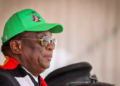
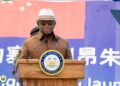
At the launch, the Vice President of the Gambia, H.E. Muhammad Jallow and The President of the ECOWAS Commission, H.E Dr Omar Alieu Touray highlighted its regional significance, noting it will support early warning systems, real-time fact-checking, and cross-border collaboration to counter disinformation.
Officials emphasized that the Centre is not a censorship tool, but a mechanism to ensure citizens have access to accurate, verified information.

FactSpace West Africa found that the work of the center focused on a website, factguard.gov.gm which provides a range of services as follows:
- Verifying information – Check if images, videos or text are authentic
- Report Misinformation
- Tracking one’s information
- Public resources
One other feature that we found was the WhatsApp hotline (+220 972 8100).

Defending Information Integrity in The Gambia
The footprints of information integrity (specifically fact-checking) in The Gambia has evolved since 2021, when FactCheck Gambia and the Media Academy for Journalism and Communication (MAJaC) set out to actively counter misinformation on social media.
The space continues to grow despite many challenges like funding, lack of training and the equally evolving nature of mis and disinformation especially on social media and also on traditional media.
It is also worth noting that crosscountry organizations like Nigeria-based Center for Journalism, Innovation and Development (CJID) through their Dubawa project and FactSpace West Africa through its focal person and volunteers in The Gambia also contribute to defending the information ecosystem.
Conclusion
While the government’s move to actively participate in the information integrity space through the center is laudable, at FactSpace West Africa, we are interested in how much of civil society the government consulted during the ideation of this center.
Modou Joof, secretary of the Gambian Press Union (GPU), the umbrella body for journalists in the country, told FactSpace that “GPU did not play any role in the creation of the Center, and has not made an official position on it.”
At the time of filing this report, FactSpace West Africa observed that the factguard website had temporarily been taken off for maintenance work.

Researched by Alfa Shaban
Featured Image shows Vice President of the Gambia, H.E. Muhammad Jallow (left) and The President of the ECOWAS Commission, H.E Dr Omar Alieu Touray (Courtesy ECOWAS)