FactSpace West Africa
Donate
  • Home
  • Fact-Checks
    • Latest
    • Trending
  • Country
    • Ghana
    • Gambia
    • Nigeria
    • Liberia
    • Sierra Leone
  • DisinfoLab
  • Media Literacy
    • Learning Materials
    • Digital Tools
  • Who We Are
    • About Us
    • How We Work
    • Principles
    • Submit A Claim
    • Our Team
    • Partners
    • Funding
    • Corrections
    • Press Releases
  • Contact Us
No Result
View All Result
FactSpace West Africa
  • Home
  • Fact-Checks
    • Latest
    • Trending
  • Country
    • Ghana
    • Gambia
    • Nigeria
    • Liberia
    • Sierra Leone
  • DisinfoLab
  • Media Literacy
    • Learning Materials
    • Digital Tools
  • Who We Are
    • About Us
    • How We Work
    • Principles
    • Submit A Claim
    • Our Team
    • Partners
    • Funding
    • Corrections
    • Press Releases
  • Contact Us
No Result
View All Result
FactSpace West Africa
No Result
View All Result
Home Press Releases

The Gambia’s Political Transition: Fact-checking the first post Yahya Jammeh presidential elections

FactSpace West AfricabyFactSpace West Africa
December 31, 2021 - Updated on March 28, 2022
in Press Releases
Reading Time: 3 mins read
A A
The Gambia’s Political Transition: Fact-checking the first post Yahya Jammeh presidential elections
Share on FacebookShare on Twitter

On December 4, 2021, Gambians lined up to participate in a presidential election that sought to reinforce the country’s democratic transition. The keenly contested presidential election was the country’s first since the fall of Yahya Jammeh’s 22-year brutal dictatorial regime in December 2016.

Expectedly, the run-up to the electoral period saw an overabundance of information and concerns about the weaponization of mis/disinformation and propaganda was widespread.

Highly politicized messages from across the political spectrum made the rounds online and offline and sometimes led people to act in certain ways.

For example, online rumours of a UDP protest against the barring of its party leader from contesting the election prompted the
deployment of police in anti-riot gears across metropolitan areas.

RelatedNews
FactSpace West Africa participates in three-day Youth Climate Reporters (YCR) programme

FactSpace West Africa participates in three-day Youth Climate Reporters (YCR) programme

2025 Cameroon presidential election misinformation: Trump tweet, CNN projection, Mohamed Salah image

2025 Cameroon presidential election misinformation: Trump tweet, CNN projection, Mohamed Salah image

FACT-CHECK: Deputy speaker’s claim that The Gambia has the cheapest gasoline price in West Africa is False

FACT-CHECK: Deputy speaker’s claim that The Gambia has the cheapest gasoline price in West Africa is False

FactSpace West Africa holds 2-day fact-checking training for Ghana News Agency

FactSpace West Africa holds 2-day fact-checking training for Ghana News Agency

The election in The Gambia is not different from many other countries around the world, with mis/disinformation and propaganda increasingly becoming one of the foremost challenges confronting the world today.

Young democracies like The Gambia are being exposed to the negative impact of information disorder that could easily be used to foment trouble and cause chaos.

The Gambia’s democratic election of 2016 has led to an expansion in the use of both traditional and social media, including online radio stations, television channels and the like.

Changes in the media landscape afforded opportunities for young people, who are at the forefront of information, media, and technology appropriation, to share all kinds of information from personal opinion, satire, expert analysis to curated content.

For those who had been oppressed for a long time, the newfound opportunity for self-expression which is aiding the needed healing from the effects of years of oppression has come with its attendant risk of excesses.

The digital space is allowing bad actors to spread misinformation, half-truths and hate speech unchecked, constituting a major risk to the country’s democracy.

With traditional media increasingly sourcing breaking news from social media, some of this mis/disinformation end up filtering into news reports and The Gambia is now having to deal with bad information both online and offline.


Collaboration

FactSpace West Africa set up a multi-agency collaboration including the West Africa for Peace Building (WANEP), Meedan, Gambia Press Union, Article 19, Meta (Facebook) and the Gambia Fact-Checking Network to help effectively tackle information disorder before, during and after the polls.

The Gambia Fact-Checking Network made up of 80 journalists and social media influencers drawn from about 30 partner media organizations across the country was set up to close the obvious gap in media and information literacy in the country.

With support from UNESCO, WANEP and Meta, FactSpace West Africa exposed the selected journalists from print, radio, TV and digital platforms, and the social media influencers to basic digital/misinformation literacy skills, the Community Standards and Guidelines of Facebook and Instagram and trained in how to source for claims and effectively debunk mis/disinformation.

The network helped in the flagging of suspicious claims online and offline and also in cross-publishing verified information on partner media platforms in local languages essentially leveraging the reach of mainstream media.


Fact-check

With a core team of 7, FactSpace West Africa’s local team of fact-checkers in the Gambia worked to tackle election mis/disinformation and published 29 fact sheets and 32 fact-checks either through the FactSpace Gambia website or via social media – Facebook, Twitter, Instagram and WhatsApp.

The team through its offline monitoring published a number of factsheets purposely aimed at informing the general public about the voting process and other key information relating to the country’s socio-political outlook.

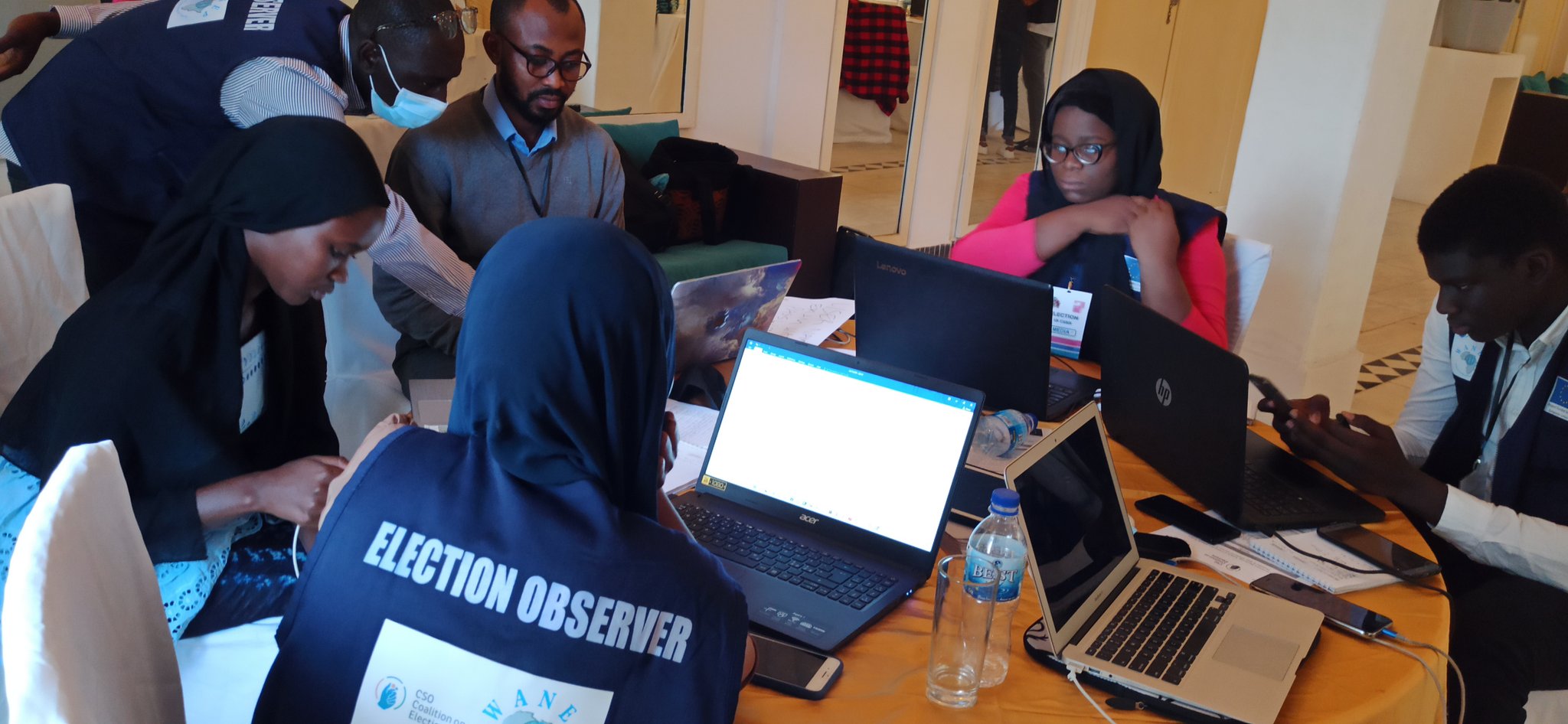
On election day, fact-checkers worked closely with 150 WANEP domestic election observers spread across the Gambia and nine analysts stationed in a situation room to verify claims that were being made on social media.

This collaboration enabled the fact-checking team to produce high-quality fact checks, fact sheets and other critical information for the public in a more robust and timely manner.


Election

Gambians cast their votes with a turnout of nearly 90 percent of registered voters in a highly contested presidential election that saw incumbent Adama Barrow contest against 5 others for the high office.

The election management body, Independent Electoral Commission (IEC) declared Adama Barrow the winner on December 5 with 53.2%, while his closest contender Ousainou Darboe obtained 27.7%.

Even before the final results were declared, Ousainou Darboe and 2 other presidential candidates rejected the results after raising concerns about the delay in the transmission of polling results.

Some opposition party supporters have since embarked on a number of demonstrations with some clashing with security forces working to maintain law and order.

This has also generated lots of conversations online and expectedly the spreading of misinformation, hate speech and propaganda have become more pronounced and demands a lot more attention from our work as fact-checking journalists in The Gambia.


By: Rabiu Alhassan
 

Tags: fact-checkingFactSpace GambiaGambiapresidential election
ShareTweetShareSend

Related Posts

FactSpace West Africa participates in AIRA Digital Content Production Workshop

FactSpace West Africa participates in AIRA Digital Content Production Workshop

FactSpace West Africa participates in three-day Youth Climate Reporters (YCR) programme

FactSpace West Africa participates in three-day Youth Climate Reporters (YCR) programme

FactSpace facilitates information verification sessions for Master’s students at University of Ghana

FactSpace facilitates information verification sessions for Master’s students at University of Ghana

FactSpace participates in first Africa Forum on Countering Foreign Interference in Dakar, Senegal

FactSpace participates in first Africa Forum on Countering Foreign Interference in Dakar, Senegal

Why misinformation spreads faster than truth: FactSpace joins Africanews online debate

Why misinformation spreads faster than truth: FactSpace joins Africanews online debate

FactSpace joins KAIPTC webinar on disinformation in West Africa

FactSpace joins KAIPTC webinar on disinformation in West Africa

Recent Posts

False! Cameroon president Paul Biya did not appoint son as Vice President

False! Cameroon president Paul Biya did not appoint son as Vice President

Pumps, prices and subsidies: How Anglophone West Africa managed fuel amid Middle East war

Pumps, prices and subsidies: How Anglophone West Africa managed fuel amid Middle East war

FactSpace West Africa participates in AIRA Digital Content Production Workshop

FactSpace West Africa participates in AIRA Digital Content Production Workshop

FactSpace West Africa participates in three-day Youth Climate Reporters (YCR) programme

FactSpace West Africa participates in three-day Youth Climate Reporters (YCR) programme

CAF’s AFCON 2025 ruling triggers ‘fake news’ – Verifying Senegal’s trophy with soldiers video, Hakimi’s rejection and Guinea petition

CAF’s AFCON 2025 ruling triggers ‘fake news’ – Verifying Senegal’s trophy with soldiers video, Hakimi’s rejection and Guinea petition

Load More

Most Popular

How to use InVID to verify videos – A step-by-step guide

How to use InVID to verify videos – A step-by-step guide

News clip that Ibrahim Traore has closed US Embassy, backed Iran in war with Israel is a deepfake

News clip that Ibrahim Traore has closed US Embassy, backed Iran in war with Israel is a deepfake

FACT-CHECK: COVID-19 vaccine myths and conspiracy theories

FACT-CHECK: COVID-19 vaccine myths and conspiracy theories

False! Cameroon president Paul Biya did not appoint son as Vice President

False! Cameroon president Paul Biya did not appoint son as Vice President

Pumps, prices and subsidies: How Anglophone West Africa managed fuel amid Middle East war

Pumps, prices and subsidies: How Anglophone West Africa managed fuel amid Middle East war

Load More
FactSpace West Africa

FactSpace West Africa

FactSpace West Africa is an independent, non-partisan organisation working to tackle mis/disinformation and propaganda across West Africa.

Follow Us

Quick Links

  • Ghana
  • Gambia
  • Nigeria
  • Liberia
  • Sierra Leone

Memberships

  • Who We Are
  • How We Work
  • Principles
  • Submit A Claim
  • Our Team
  • Partners
  • Funding
  • Corrections
  • Press Releases
  • Contact Us
  • Privacy Policy

© 2025 FactSpace West Africa - All rights reserved - Web development by EnspireFX Websites

No Result
View All Result
  • Home
  • Fact-Checks
    • Latest
    • Trending
  • Country
    • Ghana
    • Gambia
    • Nigeria
    • Liberia
    • Sierra Leone
  • DisinfoLab
  • Media Literacy
    • Learning Materials
    • Digital Tools
  • Who We Are
    • About Us
    • How We Work
    • Principles
    • Submit A Claim
    • Our Team
    • Partners
    • Funding
    • Corrections
    • Press Releases
  • Contact Us

© 2025 FactSpace West Africa - All rights reserved - Web development by EnspireFX Websites