

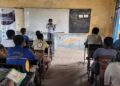
FactSpace West Africa has undertaken a series of training programmes for journalists, students and civil society players in the Gambia as part of efforts to strengthen the country’s information resilience.
The beneficiary organisations for the three-day training were: The Media Academy for Journalism and Communication – MAJaC, a leading investigative journalism organisation, Malagen, Gaye Njorro Skills Academy and the Edward Francis Centre for Justice & Accountability.
“The country has to stand ready to tackle the weaponisation of mis/disinformation and Hate Speech. In three days, the team has built the capacity of more than 70 participants from these institutions and ensured they understood the tactics being used by bad actors to manipulate our information environment, as well as the basic digital skills to counter them,” Demba Kandeh, a board member of FactSpace West Africa, said.
Despite significant progress in media freedom since the end of the dictatorship in 2016, The Gambia is confronted with a myriad of challenges due to its weak information ecosystem, low digital access and gaps in literacy levels.
RelatedNews

Misinformation and disinformation remain top short-term global risks for the second consecutive year, according to the World Economic Forum’s Global Risks Report 2025.
The Gambia is preparing for its next presidential election, scheduled for December 2026, amid rising concerns that hate speech/disinformation would feature prominently as the highly anticipated political theatre gets closer.
“These engagements are crucial in assessing at first hand real issues happening at the local level from participants and how they can easily be exploited online by bad actors. So there is a need for continued learning and engagement to help promote information integrity during the elections,” said the Executive Director of FactSpace West Africa, Rabiu Alhassan, who facilitated the training programmes together with Demba Kandeh.