

FactSpace West Africa participated in a two-day training by UNESCO Ghana Office and the Ghana Broadcasting Corporation (GBC), for Public Service and Community Media Professionals on Compliance with Regulatory Standards and Media Viability.
The training, held at the GBC Training School in Accra, focused on strengthening the capacity of professionals to uphold ethical standards, understand regulatory frameworks, and enhance media sustainability in an evolving digital landscape.
The training covered a range of topics, including national and international media regulatory frameworks, drafting internal compliance policies, ethical broadcasting, and strategies for media viability.
Participants also engaged in case studies and practical exercises designed to strengthen their ability to translate regulatory principles into daily newsroom practices.
RelatedNews

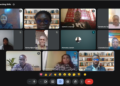



Rabiu presents on ethical broadcasting and content regulation
The Executive Director of FactSpace West Africa, Rabiu Alhassan, led participants through a session on Ethical Broadcasting and Content Regulation.
His presentation focused on the importance of editorial policies, combating misinformation/hate speech, and promoting public accountability. He stressed that credibility and professionalism remain the foundation of public trust in journalism.
“Because we are experiencing the digital revolution and anybody can go online and create content, it is possible for all sorts of people to publish all kinds of information without verification.
“That is the reason why there is a need to understand information disorder, i.e. misinformation and disinformation. You need to understand the information warfare that is playing out, so that you will be able to stay on top of your game, even as an established newsroom or mainstream media organisation,” he said.
Rabiu also introduced participants to practical digital verification tools such as Google Reverse Image Search and InVID Video Verification, demonstrating how these tools can be used to verify images and videos circulating online.

GBC DG and NMC boss deliver addresses
In his opening remarks, Prof. Amin Alhassan, Director-General of the GBC, underscored the need for continuous learning among media professionals in the face of rapid technological changes.
“The field of journalism is changing too fast for any of us to fully control or even understand. Even the universities are struggling to make sense of the changes we are experiencing, and those of us in industry are confronted daily with the complexities of our profession, especially with the introduction of Information Technology (IT) and Artificial Intelligence (AI).
“I hope this training will help us address the weaknesses we find in ourselves in our daily reporting. By the end of this program, I hope we will have built our capacity to know more and to tell better stories,” Prof. Alhassan stated.
Executive Secretary of the National Media Commission (NMC), George Sarpong in his opening remarks, emphasised that the training goes beyond routine capacity building to serve as an empowerment platform for journalists and media managers.
“We see training not as a formality, but as empowerment. It is an opportunity for every journalist, producer, and manager, whether in public or community broadcasting, to see regulatory literacy as a strategic advantage and a mark of professionalism. This program is meant to help media practitioners stay credible, innovative, and sustainable in a fast-changing digital environment,” he said.
The initiative forms part of ongoing efforts by UNESCO Ghana, GBC, and FactSpace West Africa to enhance regulatory expertise, promote ethical journalism, and ensure the long-term sustainability of public and community media.
By equipping media professionals with the right skills and tools, the program aims to reinforce public trust and safeguard the vital role of the media in democracy and development.

Written by Samuel Nii Adjetey